Sunday, November 14, 2010

A Hard Nut to Crack

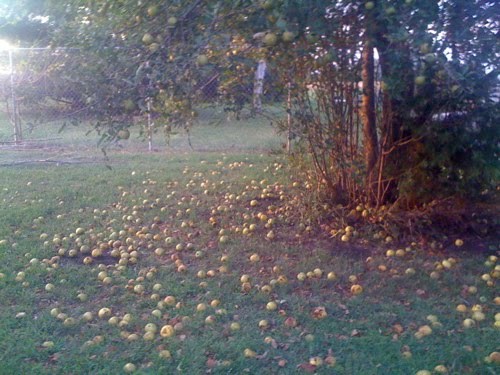
What’s going on with the weather? Not that I’m complaining, but shouldn’t we be turning up our collars and digging mittens out of the closet? I wore a sweater over my turtleneck yesterday, and was over warm all day. The sky has been stunningly blue, and the leaves in the yard are toasting to a crispy brown. The trees are more than half bare, but I’m waiting for the last leaves to fall before I climb the ladder to clear them from the gutters. In town the leaves make new patterns of color and texture above and below, but I’m on the lookout for walnuts.

For years I’ve been thinking about buying a walnut cracker. We have plenty of Black Walnuts in the woods, and the lone Walnut tree in the yard had finally, after twenty years started dropping nuts, which mostly fall in the driveway and get run over. Juglans nigra, or Black Walnuts may be the hardest nuts to crack. They begin like green leathery peaches, with a fresh, pungent smell. If you try to remove the husk, your fingers will be stained like an auto mechanic’s for weeks. Wait, and the husk will decay, the green turning to a deep, dark brown—almost black. It is much easier to remove then, but you still have stained fingers to contend with, and you still have to shell them. You can heat them up and hit them with a hammer on a flat rock, but it’s difficult to control the crack, and the shells fly, while the nutmeats get smashed—that is, if the nut opens. Every fall I would look for nutcrackers on the internet, but any that claim to handle Black Walnuts are pretty pricey. A few years ago I bought a used one online for about $15, but it was disappointing. It could handle J. nigra’s cousin, Carya ovata, the smaller, slightly less dense nut of the Shagbark Hickory, but just barely, and after standing at the table cracking nuts one evening for about an hour, I had a backache for a week. The gallon jar of the Hickory nuts I gathered stayed on my kitchen shelf for three years, and the nutcracker stayed in its box in my pantry.

Again this year I searched for walnut crackers, and finally did the math to realize that even if I have to shell out (oops) $75 dollars for a nutcracker, it will pay for itself pretty quickly since I buy Walnuts for $10+ a pound. I mean, I always knew cracking my own walnuts would be a good deal, but even so, making that kind of purchase is hard. Well, this year I found a new nutcracker I hadn’t seen before for more like $50. I impulsively ordered it, and it arrived a few days later. It is cleanly mounted on piece of finished wood, and has fittings to accommodate Walnuts and smaller nuts, like Hickories or Filberts. With gears and springs it looks like a torture device from a tool and die shop. It has a lever, and you can adjust the pressure by turning screws or selecting specific gears. Luckily, before I used it I read an online review which suggested covering the nut with a towel. Even though the lever gives you great control, the nut often explodes under the pressure. I quickly used up all the Walnuts I could find in my front yard, and then switched to the three year old Hickories. The Walnuts mostly came out in halves, but even when I had to pick them from the shells, they came out in large pieces, and I filled a bowl quickly with fresh and free nutmeats. Hickory nuts are another story. I was happy to find them tasting very fresh—the shells do a good job of protecting them—but they are just that much smaller than Walnuts. They seem like half the size, but it took maybe four times longer to fill my little bowl with the sweet Hickory nutmeats. Hickories have a more Maple-y flavor than Walnuts, kind of like Pecans. I like them even better than Walnuts, and they are almost worth the extra trouble. I keep my eyes open for both kinds of trees. I spot a Walnut tree on my walk to work, and on the way back to the car, I bring a bag to fill. The squirrels and I haggle over portion, and we all leave with our share of the gift from the trees.

Shell out Beauty; Share in Peace; Blessed Be.

Mary Lucille Hays lives in Birdland near White Heath. She is interested in the gifts all around and in her own back yard. Her favorite kitten is named Mink, but she would part with her if someone promised to give her a good home. Ditto for her brothers and sisters: Pumpkin Sam, Ruby Pearl, Quiver, Tortiebelle, and Toby.

Sunday, November 7, 2010

Wall of Gratitude

In Birdland the wood smoke and the slight chill help us welcome the early evenings and late mornings. We keep warm with brisk walking, sweaters, extra socks, hot tea, porridge (we recently discovered steel cut oats with warm pear butter), and, of course, invigorating chores. Summer rhythms are winding down and harvest season is pretty much over (but for a few lingering apples and pears that need peeling) so I turn my attention to more structural employment: collecting stones for my spiral herb garden and my wall of gratitude. The spiral already has a beginning, like a big snail next to my path, and I imagine it will take me all winter to finish it, but the wall of gratitude is just at the planning stages. Actually, I have no idea how to build a stone wall; I need to do some research. But I do know that I want a tangible reminder in my yard of the kindness of friends and strangers.

Writing these letters has surprised me in many ways. Sometimes it’s a funny, one-way correspondence. I’ll run into people I haven’t seen in a while, maybe years, and they know all about what I’ve been up to, while I know nothing of their adventures. I’m continually surprised when I begin to tell a story, only to be interrupted by, “I know! I read about that.” If I’m lucky, they’ll have time to give me news, but often these exchanges are limited by the general busyness of our lives. We’ve both got groceries to get, other errands to do, kids to drop off or pick up. We part, but the brief exchange endows the rest of my day with a soft glow.

I get surprised another way, too—by hearing from complete strangers through letters or email. Sometimes they want to offer a recipe or a book recommendation, sometimes the news of a connection with my family, sometimes just to tell me about a flock of chickens their grandparents kept, or about their family of Shih Tzus. I’ve heard from readers with stories of my grandparents and great grandparents, and I treasure these connections. Sometimes readers even offer tangible gifts, and I’ve been blessed with yarn and needles from Sue, a fellow knitter; Irises, Day Lilies, Coreopsis and green tomatoes from Nancy and Larry, fellow gardeners with plants to spare after their landscaping project; books for my son about sailing, and t-shirt scraps for making rugs from Edwina; and offers of help with chores from various friends, old and new. Our neighbors, Jim and Sean dig us out of the drifts in the winter. A picnic table and umbrella from Dave and Pam make a focal point for the east side of the house, and a semi-circle of Sedum from Gayle defines the space, while Gayle’s husband stacks firewood he brought us. I can’t imagine what I’ve done to deserve these gifts, but I value these glittering links to my community. And isn’t that what community really is? Sharing our gifts, tangible and spiritual with each other? I feel lucky to be part of such a vibrant neighborhood—both geographic and virtual. When people share these gifts with me, I feel inspired to find new ways to share. I can never really repay these friends, but keeping a balance sheet is not what community is about. Instead I try to think of ways to keep community flowing by passing on gifts of my own. Who in my life might like a little jar of apple butter? A loaf of bread? A visit on a chilly day? A story? A smile? A letter? A card? A kitten? (A really cute one at that. Come on, you know you want one.) Come to think of it, if I were keeping a balance sheet, I’d be in the red. I’d better get busy.

Share in Beauty: Pass on Peace: Blessed Be.

Mary Lucille Hays lives in Birdland near White Heath. She is interested in community and social justice, and her own back yard. Her basement kittens are seeking new homes.

Autumn Winds

In Birdland we’ve had mild weather for so long that we’ve almost forgotten that winter is coming. We haven’t turned on the furnace yet, but this morning I put on two sweaters and then carried in firewood for the season’s first fire. The coming winter begins a whole new arrangement, and the wood stove, which acts as a plant stand all summer needs cleaning. The plants must find a new home. As I move them to the table I remember that the stovetop can be my slow cooker for the apple and pear butter for the final fruit of the season. Life has been so full since last winter that I’ve almost forgotten how much I love cooking soups and stews on the top of the woodstove, and the memory comes back in snatches, like a pleasant dream. The fire has caught now, lighting the glass in the door cheerfully, and I fill the kettle for tea and place it on top of the stove. It will take a while to boil there, startling me with its whistle after I’ve long forgotten my tea, but then I will have hot water for tea all morning and into the afternoon.

The woodpile is full, thanks to our neighbor, Tom, who came last week with a trailer full of firewood, cut to the size of our stove. We are lucky to have such caring friends. I heard Ursula bark and went out to find Tom at the woodpile. Together we stacked the logs, and then I went inside for a little jar of apple butter—small thanks for a huge favor, but I hope his family enjoys it. Winter can be long and lonely and cold, but we get by with help from our friends.

The wind has hit us heavily this week—tipping over my picnic table and tumbling my Adirondack chair across the yard. The wind keeps us awake at night, but makes Ursula’s crocheted discs sail twice as far, and she joyfully races into the field after them, leaping to catch them on the fly. It blows my laundry off of the line and my mail out of the box. The wind blows the leaves off the trees and around the yard, and sometimes into the next county. Last week I built a new mulch bin out of wooden pallets. It is a three-sided framework to pile leaves and sticks, and it took only about five minutes to screw together. I had to reverse it when I realized I had set it up facing east so that the western wind would blow the leaves right out. I turned it around, and now the wind will blow leaves into the bin. We put two wheelbarrow loads into the bin and stomped them down. We could probably fill six more bins with the leaves in our yard, but the point isn’t really to rid the yard of leaves. The wind will do that. Instead, I’m thinking of the rich, dark leaf mulch we’ll have for the garden in the spring.

The radio warns of frost tonight, and I’ll go to the garden and pull last of the little yellow pear tomatoes off the vine, and pick up any apples and pears that have fallen since yesterday. I’ll cut the tomato vines to hang in the basement; the remaining green tomatoes will slowly ripen. Then I’ll walk down the road and hunt for yesterday’s mail, thinking about the ripe but slightly wrinkled tomatoes we’ll have for our winter salad to remind us of the last sunny days of autumn.

Blow in Beauty; Gather Peace; Blessed Be.

Mary Lucille Hays lives in Birdland near White Heath. She is interested in the change of seasons and community. She has kittens ready for adoption.

Saturday, October 30, 2010

Slumber Party

Last weekend Birdland regressed to Junior High; we had a slumber party. For almost twenty years a group of women has been getting together to talk, laugh, complain, cry, share food and drink wine, watch movies, discuss books and politics, and act goofy. We met when most of us were waiting tables at The Great Impasta, but now only my dear friend, Nancy, has more than a heart connection there. We have become mothers and sent kids off to college together. These friends are an important part of my life, and in subtle ways have helped me develop my vision. I am grateful for the loving connection and support.

Most of our visits are just evenings, sparkling into the night, but last year we said goodbye to our beloved Diane, who moved away. Whenever she comes home, her visits are worthy of a sleepover. I had fun spiffing up the house, making up spare beds, planning the menu. Our gatherings are potlucks, but the hostess makes a little extra. I decided on a fondue, bread, veggies, and birthday cake for the fall birthdays. I threw gardening into the mix (for warmer meetings we always drift out to the garden of the hostess to admire whatever’s blooming). Inspired by my other Nancy in Indiana (different friend, similar bond) I decided to turn this reunion into a plant exchange. We would dig peonies to border my new path to the front door and for my friends to take home.

An overnight get-together has a different quality—more spread out. Starting in the afternoon, we take advantage of the daylight. Nancy and Diane arrived in time to help me with the last of my chores. Diane frosted her own birthday cake while Nancy made up the beds. Diane worried about the laundry on the line—we would probably forget about it and then the dew would come and wet it again—so she took it down while I looked for the leaves for the dining room table. Joan arrived as we were expanding the table, and soon it was covered with our feast. We pulled out wine glasses and popped corks, and Cheryl and Gretchen arrived. We took the party outside in the afternoon sunlight, and soon were broken into groups to wander around the yard. I told Diane that I had wanted to mow around the fire pit so we could have a bonfire later, and she said, “Go ahead and do it, then.” I went to the barn to get the mower, grateful for friends who didn’t mind my last minute chores.

For our regular events we tend to stick together—all hang out in the same room all evening, but for an overnight we weave in and out of conversations beginning in one part of the house and migrating to the yard to watch the deer grazing in the back field. Pockets of banter become part of a colorful tapestry. We ate and drank and laughed and wandered, and suddenly it was dark. I decided to move the party out to the fire pit. Sometimes you just have to take charge, and I delegated tasks (you bring the s’more stuff; you two go get chairs from the table; you take this newspaper and matches) and soon we had a little fire going. We roasted marshmallows and ate s’mores. Someone heard the coyotes start up, a sound beyond the range of my hearing aids. Someone started singing Beetles and Cat Stevens songs. Someone started with the gratuitous swearing, cursing like only middle-aged women can curse. The dogs joined us, Isis to lie just behind my chair, Ursula to circle hopefully, eyeing the graham crackers. I went inside for something, handing off the bag of s’more fixings to Gretchen. “Guard this with your life,” I said. “Why?” she asked, but it was already too late. Ursula slipped into the circle, grabbing the marshmallows and running into the dark. Chaos ensued. Eventually, someone caught the dog and retrieved the marshmallows. The singing and swearing resumed. Joan began scouting the yard for more firewood. She had one of those mini-headlamps, and would take off into the dark, and several minutes later we’d see the glowing lamp returning. Joan would be dragging a large tree branch she found somewhere. She called for a saw and kept the fire fed for hours until we had sung and sweared ourselves out.

The next morning after a potluck brunch, we began to disperse. Nancy and Diane stayed to help mulch my new path. We bordered it with Peonies and Nancy’s Sedum. I’m already thinking of excuses to have another sleepover. Finding time in these hectic days for community and friendship can be a challenge, but it is well worth it.

Celebrate Beauty; Assemble in Peace; Blessed Be.

Mary Lucille Hays lives in Birdland near White Heath. She is interested in social justice and community and her own back yard.

Friday, October 15, 2010

Autumn in Birdland

A Birdland autumn is not flashy. We don’t have the sugar maples that make a crimson and orange light show in town. Our trees are common—hackberry, mulberry, choke cherry—and colors are muted. Out here Autumn is big pale blue sky with a few clouds; the green seeps out of the forest and meadow to become a soft, tawny, yellow-brown montage. Autumn is the rosette of an aster—green, toothy leaves with maroon highlights, growing out of the bean stubble after the harvest. It’s round pears that were supposed to be plums, falling into the grass beneath the tree. It’s the tawny goldenrod going to seed, a ghost of its former, sunny brilliance. It’s the tiny yellow bean, shining like a full moon on the gray soil next to last year’s corncob in the detritus of combine leavings scattered across forty acres. It’s the regular rows crossing the field, like ridges on corduroy, straight up to my backyard.

This week the wild kittens have emerged. Kali the ghost cat is getting more tame by the day, but still won’t let me touch her. She comes up from her corner under the basement pantry shelf and gazes at me silently. Then I know the tray of kitten food needs to be refilled, and I follow her down for a visit. Her kittens teeter out from beneath the shelf, some when I call, the rest when they hear the scoop of nuggets hitting their tray. They are all colors—a gray tabby, a yellow tabby, a nearly black tortoiseshell, a mostly gray ball of fluff, a calico, and a black one, tinier than the rest. She is half the size of the largest ones. I worry that she doesn’t eat enough, but when the others run for the food, she beelines toward my feet. I pick her up and warm her in my hands before setting her right in the middle of the food tray. Kali is a short haired calico, but most of her babies have luxurious, fluffy coats. Some may lose that soft down when they get a little older, but the gray and the tortie are obviously long-haired. I have a few weeks yet before I have to catch Kali, and take her to the vet for a little procedure. I took Aunt Jane’s advice to handle all the kittens every day, so they won’t be wild, like their mother. Kali looks at me curiously, when I pick them up, and I’m hoping she will realize that I am harmless. She doesn’t know that I plan to destroy her trust in one quick lunge, but I can’t let her fill my basement with kittens. In a few weeks I’ll need to find homes for her babies, and when that happens, she’ll be trying to get out again to meet up with some romantic Tom.

I’ve been making pear butter in the crock pot. It’s easy: Peel and core the pears, cook the quarters until they’re soft. Mash them down with my great grandmother’s wooden potato masher. Cook and stir; stir and cook, until it’s done. Serve over anything—oatmeal, ice cream, chicken, toast. I don’t have time or jars enough to can it, so I’ve been freezing it in containers. The pears are still ripening and falling into the grass. I’ve fallen into a nice rhythm. In the evenings I sit outside until the sun sets, peeling pears to cook overnight on low. The house fills with a fragrant, sweet bouquet, and I have warm pear butter for my oatmeal in the morning.

Now I go out to toss last night’s peelings to the chickens and collect more pears to peel for tonight’s batch. As I walk back to the tree I think about fall chores: I don’t much rake leaves in the yard, but I’ll need to empty the gutters soon; the rain barrel will need to be emptied before we get a hard freeze; the woodpile needs to be replenished and the stove checked. I think about the cold weather coming and the early dusks. But for now, I’m happy with this mild, cool weather and the scent of simmering pears. I’m thinking that a Birdland Autumn is not too shabby.

Harvest Beauty; Capture Peace; Blessed Be.

Mary Lucille Hays lives in Birdland near White Heath. She will soon be posting pictures of kittens available for adoption.

Tuesday, October 12, 2010

Snail Garden

Yesterday I walked out into the corn stubble behind my house with my wheelbarrow. I was after some rocks. In my mind they were as big and round as soccer balls. Many years ago we had walked out to the far corner of the field with friends, the kids, and a picnic lunch. Michael later talked about a pile of big rocks in that corner, but I only remembered the long walk across the newly harvested field under the October sun; the laughing, and eating bread and cheese and apples when we got to the very edge of the farm. We wore sweaters against the chill, but had shed them by the time we crossed.

I needed the rocks to construct a spiral herb garden. I wanted my own the moment I saw Nancy’s in Indy a few weeks ago. She had made a spiraling dome, four feet in diameter, and two feet high. Round stones made up the snail shape of the garden. She is waiting for spring to plant her herbs, but it is already lovely, a simple coil of stone and earth in her back yard. I asked for detailed instructions, and then demanded a photo. I don’t remember if I was such a copycat when we were kids (probably), and I hope she doesn’t mind it now.

As the sun was getting low-ish yesterday, I pulled the wheelbarrow out into the field behind the house. Ursula bounded ahead of me, thrilled to take a long walk off leash. Far to the east, by the meadow behind the woods, she noticed some tall dogs, some with spectacular crowns. They must be the kings of the pack. She barked in a friendly manner, and they gazed at us for a few minutes before declining our company, running into the woods with their white tails standing straight up like flags. We turned back west and I began to pick up rocks, dropping them into my wheelbarrow. I found a few the size of acorn squash, but most were like potatoes. I crossed the bean field and went into the rougher terrain of corn stubble. The wheelbarrow was getting heavy. I decided to stop picking them up until I got to the legendary pile in the corner. But then I would see rosy granite, like an apple half buried in the soil, and I couldn’t leave it. Suddenly I realized my load was heavy enough, and we turned back toward home. I dumped my rocks in the yard, and went to find a large piece of cardboard, about 3 foot square. I laid the cardboard on the grass and weighted the corners with the four largest stones. I put one in the center and began to make a circle, placing the best stones like the numbers on the face of a clock. I filled in the border with the potato rocks until I had most of a circle, and then spread mulch over the cardboard.

Now the sun was sinking; did I have time for one more quick trip? I would take the empty wheelbarrow to the corner of the field. I hurried across to the hedgerow, and got sidetracked a little while with the hedge apples—lovely, yellow-green, Osage Oranges with a sharp, citrus-y odor. I tossed a few in the wheelbarrow and turned west again. Now the sun had dipped below the tree line at the far edge of the field, making silhouettes of Jim’s barn and house, and the row of trees that borders our neighbor’s field. Now the sky was banded all around with lavender and aqua, even to the east. I found a stony loaf of pumpernickel and lifted it into my wheelbarrow, which I pulled along the edge of the field, loading it further despite myself. Finally it was too heavy to pull, and I left it on a little hill, determined to cross to the corner before dusk. The sun dipped lower and the air was suddenly chilly. I walked faster, and Ursula loped along at my side. I made it to the little meadow at the corner. It was bordered by a hedgerow and the back fence. A couple of dry gullies cut into it. No stones, but a pile of broken tiles under a tree, and a pile of concrete rubble under another. I stood for a moment in the corner, gazing back towards my house. It had dipped behind a rise, and I couldn’t see it from here. I could be a million miles away. I thought about the ghosts of that long ago afternoon visit. I sniffed the air, and then turned back toward my wheelbarrow and made my way home through the gathering twilight.

Gather Beauty; Assemble Peace; Blessed Be.

Mary Lucille Hays lives in Birdland near White Heath. She is interested in issues of social justice and ecology.

Friday, October 1, 2010

Envisioning the Path

In Birdland we are on the edge of Autumn. The leaves haven’t yet turned in earnest or shaken down out of the trees to fill my gutters and carpet my yard, but the low angle of the sun in the mornings and evenings shines a golden light against every horizontal surface, projecting the colors to come. Summer’s Jack-in-the-beanstalk growth has slowed and the summer can’t make up its mind to stay or go.

Last week I drove to Indianapolis to visit my childhood friend, Nancy. She was having a Peony digging party. She admitted it was the old Tom Sawyer trick, an easy way to get her Peonies moved from one side of the yard to another, but I think we got the best end of the deal. She fed us a delicious lunch, and we got to take some plants home. Before I drove over I cut back and divided one of my own Peony bushes—a lovely dark pink with full flowers I dug twenty years ago from my grandmother’s yard. The roots were large and white, and smelled faintly of Sassafrass. I brought some of those to share, and took home a bucket of rootstock from pale pink and white bushes. A bunch of Nancy’s Indianapolis friends came too, and we were a lively crowd—chattering through lunch and breaking into groups to dig and divide the various colors. We’re not sure what we ended up with, because Nancy could only remember the colors of two of the bushes. We planted a row of random roots to edge Nancy’s yard, and at home, later, I extended my path to the barn with a double border of peony bushes. Of course now, they’re just brown twigs sticking out of the mulch, but I can imagine the spherical bushes come spring.

In Indiana I got to meet in person friends I knew only virtually, and I got to set the record straight a little. Susan seemed surprised when I ‘fessed up to the state of my own vegetable patch (Overgrown now, with sad, last-gasp cucumbers turning yellow and bitter on the chicken wire; the chives, onions, and garlic, long buried by the monstrous tomato plants; too many of the tomatoes left on the vine too long, only a small bag of dried Plum Tomatoes to show for my harvest.) Of course, Susan only knows Birdland by what she reads in these letters, so I had to admit to her that I make it sound way better than it really is. Sometimes I feel like a fraud, but usually I think that writing these descriptions opens my own eyes to the beauty hidden in plain sight amidst the chaos of my life. I guess I’m guilty of telling stories with selective focal points. The Birdland of the letters contains the vision of what the real life Birdland could be if I had, say, an extra ten hours in my day, or an extra three days in my week. If things like flat tires and missed due dates and lost contacts and burnt pies, long meetings and expensive dental work didn’t happen. If I had a staff of gardeners, or could afford to retire, I’ll bet Birdland would be a lovely garden amid the corn and beans.

Susan told me that the vision is important, and I realized that equally important is the faith of people like Susan, who can imagine that winding path to the barn even as the crabgrass creeps over the mulch like despair. That faith is significant, fueling my desire to pull out those weeds and follow that path to joy, from the clothesline all the way to the butterfly house I want to build next spring. I’m grateful to people with faith in the vision. They keep me walking on my path. And maybe soon I’ll just host a Peony dig of my own.

Imagine Beauty: Envision Peace; Blessed Be.

Mary Lucille Hays lives in Birdland near White Heath. She is interested in the intersection between community and nature.